
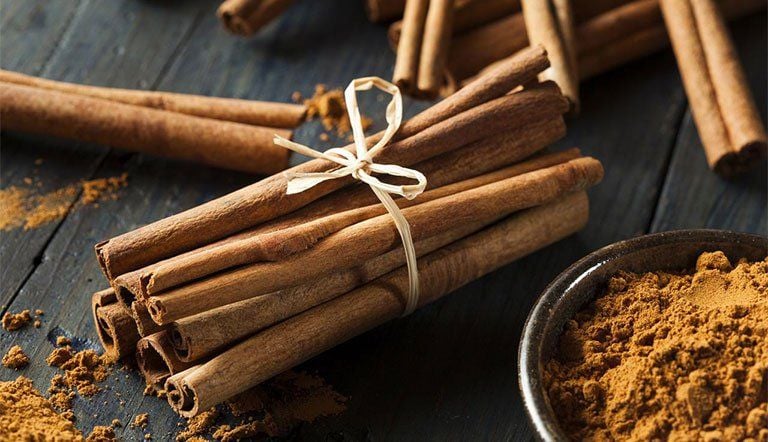
Cinnamon is not only a medicinal herb but also has many applications in life. If you pay attention to your surroundings, you will easily recognize the scent of cinnamon somewhere from a luxurious meal in pho, from incense sticks of ancestors, from shoe insoles. Cinnamon trees are special in that they not only provide us with valuable medicinal herbs, but are also widely used to enhance the flavor of life.
Oriental medicine considers cinnamon one of the four precious medicinal herbs: ginseng, velvet, cinnamon, and aconite. Vietnam is one of the countries that grows a lot of cinnamon, exporting hundreds of tons of cinnamon bark and dozens of tons of cinnamon essential oil every year. Cinnamon’s scientific name is Cinnamomum loureirii Nees; family Lauraceae. The tree is large, 10 – 20m high, with cracked outer bark and many branches. The tree grows wild in the forest, or is planted by seeds or cuttings. It can be harvested after 5 years, but the cinnamon bark is best peeled after 20 – 30 years. Cinnamon bark is easier to peel in April – May or September – October because this is the stage when cinnamon produces resin.
Cinnamon branches are harvested in the summer and dried. Leaves and bark are used to extract essential oils. Small, shaved cinnamon branches are called cinnamon needles, small, medium-sized branches are cinnamon branches. Cinnamon bark is called pine cinnamon. Pine cinnamon has its rough outer bark removed, the inner layer is called cinnamon heart. Cinnamon peeled from the trunk, large, thick branches is cinnamon meat.
Chemical composition: The bark is rich in tannin (5%) and contains essential oil (1.2 – 1.5%) but the essential oil is rich in cinnamic aldehyde (80.85%). There is no eugenol but there is a small amount of cinnamic acid, cinnamyl acetate and o-methoxycinnamaldehyde; there are also cinnzeylanol, cinnzeylanin.
Traditional medicine has a variety of uses for cinnamon. Today, according to the latest research, cinnamon also has the effect of preventing diabetes, reducing the risk of heart disease, strong anti-inflammatory, protecting the brain from dementia and cognitive decline, preventing cancer, acne, eliminating bad breath, good for the skin…. Cinnamon has given us many medicinal properties and rich treatment applications throughout the history of medicine.
In daily life, cinnamon has many applications such as in culinary use as a spice; health care and beauty such as herbal scented bags, housewarming, shoe insoles…
– Helps you sleep easily: You can use cinnamon essential oil to burn and place in the corner of the room. That will create a mechanism to diffuse the aroma, making the space in the room have a characteristic herbal aroma and make it easier to sleep deeply.
– Treating bone and joint pain: Cinnamon soaked in wine for massage helps reduce joint pain very well. However, be careful not to use too much as it will burn the skin because cinnamon is very hot. You can use a few drops of cinnamon essential oil mixed with a base oil such as coconut oil or baby oil to massage to help relax and stretch the muscles very well.
– Prevent bad breath: You can use dry cinnamon bark or cinnamon essential oil. The aroma of cinnamon will help you have fresh breath. Chewing a piece of dry cinnamon also has antibacterial and anti-inflammatory properties to eliminate tooth decay and other causes of bad breath.
– Reduce symptoms of flu and cold: Mix a few drops of cinnamon essential oil in a small pot of hot water to steam your face to clear the respiratory tract, cure stuffy nose, and make breathing easier.
– Use for soaking, bathing, steaming: Makes the body fragrant, warms the body, relaxes the whole body.
– Cinnamon, a spice of many delicious dishes: The aromatic, spicy and sweet taste of cinnamon helps reduce the fishy, pungent smell of fish and meat; makes the dish more attractive, stimulates the digestive system. As a spice ingredient for pho, bun bo, cinnamon-flavored cakes, cinnamon sausages… In addition to the aroma that makes the dish more attractive, the essential oil of cinnamon also helps the digestive system fight bacteria, making the dish warmer, eliminating the cold, helping the eater avoid stomach aches. However, caution should be exercised and used in moderation, using too much cinnamon can cause irritation of the lips and mouth, people who are allergic to cinnamon should avoid dishes with cinnamon as a spice, and should not eat too much cinnamon because cinnamon is hot, causing an imbalance of yin and yang in the body.
– Cinnamon scented bag: Moldy smell from clothes or damp lime walls, air conditioner smell, car smell… unpleasant odors that affect the fresh air around will be completely removed with cinnamon scented bags. Cinnamon essential oil has the effect of disinfecting, killing fungi, repelling parasites
– Shoe insoles: Deodorizing, warming the soles of the feet, limiting foot fungus or candida albicans.
– Cinnamon is also an indispensable ingredient in herbal incense used in worship and meditation. Incense with cinnamon as an ingredient is very fragrant, bringing a feeling of warmth and peace. Ingredients for making incense include toothpicks, cinnamon powder, glue powder… Depending on the mixing method, it creates different special scents.